RankingDeals
Electronics & Tech

6 Best Soundbars of 2026

Our guide to the 6 best soundbars of 2026, from compact Atmos bars to full surround systems, compared across leading reviews.

By RankingDeals Updated: How we rank

As an Amazon Associate I earn from qualifying purchases. Advertising & Monetization Disclosure.

Quick answer

The best choice for most people is the Samsung HW-Q800D (9.1/10). A complete 5.1.2 Atmos package with wireless subwoofer, named the best pick for most people by TechRadar.

Check price on Amazon

Also worth a look: Sonos Arc Ultra (Best All-in-One); Samsung HW-Q990H (Best Flagship System); JBL Bar 1000MK2 (Best for Atmos Surround).

Top picks at a glance

1

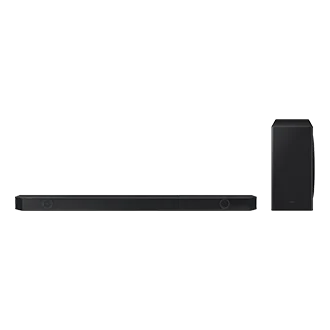
Samsung HW-Q800D

Best Overall
9.1/10

Our take

A complete 5.1.2 Atmos package with wireless subwoofer, named the best pick for most people by TechRadar.

Pros

  • Atmos system with subwoofer in one box
  • Simple setup with one cable
  • Adapts its sound to the room
  • Works with recent Samsung televisions for added features

Cons

  • No 4K 120 Hz passthrough
  • Best features need a Samsung television

Full review

The HW-Q800D is the bar we point most people to, and TechRadar names it the best soundbar for the majority. It is a 5.1.2 Dolby Atmos system that supports DTS:X and comes with a wireless subwoofer, so it delivers the deep bass and sense of height that make films feel bigger without needing a pile of extra boxes. For the money, few systems in this list put so much of the cinema experience in the box. Setup is simple: one HDMI eARC connection to the television and the bar does the rest. Samsung's Q-Symphony feature can combine the bar with the speakers of a compatible Samsung television, and the wireless Atmos mode works with recent Samsung sets. The bar adapts its output to the room, which helps in less-than-ideal living rooms. It has one HDMI input as well as the eARC output, enough for a console or streaming box. What it gives up is mostly at the edges. It does not pass 4K at 120 Hz, so it is not the answer for a demanding gaming setup, and its best features lean on a Samsung television. It is also the previous generation: Samsung has since launched the HW-Q800H, but that model does not appear to be readily available in Spain at the moment, and the independent guides we compared still recommend this one, so we keep it at the top of the list. Choose it if you want a complete, well-balanced Atmos system for a normal living room without paying flagship money. If you have a large room, a fast games console or want the biggest surround effect, the flagship Samsung or the JBL below are the better step up.

2

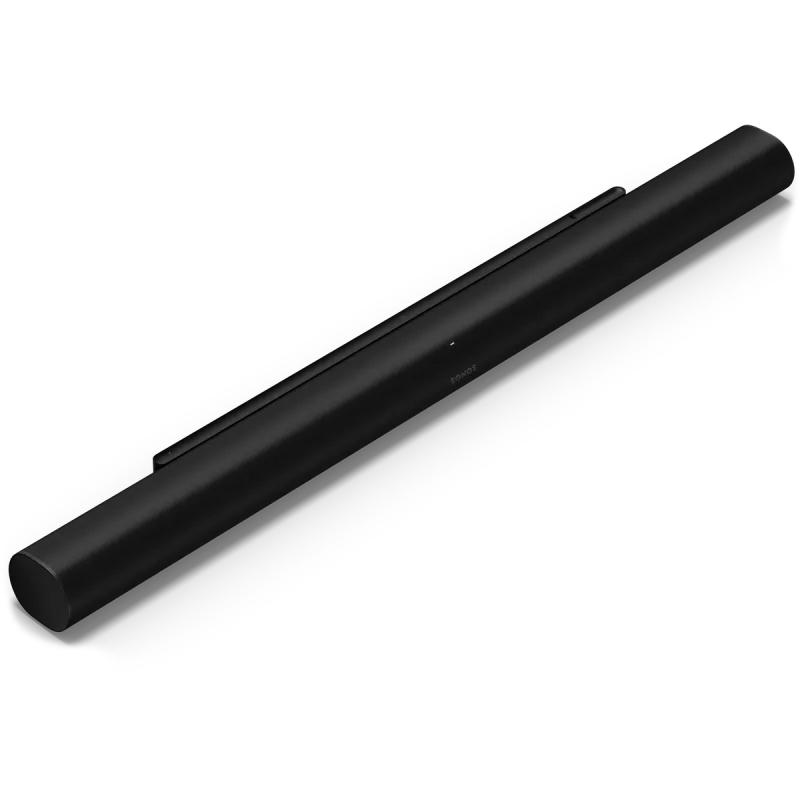
Sonos Arc Ultra

Best All-in-One
9.0/10

Our take

A 9.1.4 Atmos bar with strong built-in bass and Wi-Fi streaming; surround needs extra Sonos components.

Pros

  • Powerful bass without a separate subwoofer
  • Wi-Fi streaming and multiroom
  • Expandable with subwoofer and rear speakers
  • Clean, minimal design

Cons

  • No DTS:X
  • One HDMI port and no passthrough
  • Full surround raises the cost a lot

Full review

The Arc Ultra is the answer if you want one elegant bar and no wires running around the room. It is a 9.1.4 Dolby Atmos bar with a built-in bass driver, and Xataka and TechRadar both rate its low-end punch highly for a bar that needs no subwoofer. It is also the pick for people who play music through the bar as much as they watch television, since Wi-Fi streaming and the Sonos app are central to the experience. The system grows with you. A dedicated subwoofer can be added later, and so can rear speakers, which makes it easy to start small and build up. SoundGuys recommends the Arc Ultra paired with a Sonos subwoofer as its best combination for a bar with deep bass. There are trade-offs. It does not support DTS:X, it has a single HDMI port for the television and passes no signal through, and a full surround setup takes extra components that raise the total cost considerably. Compared with the Samsung systems, you get less out of the box for the money, and you pay for the design and the ecosystem. It is a strong choice if sound quality in a tidy package matters more than raw features, and if you already use or plan to build a Sonos system. If you mainly want maximum surround for the least money, the Samsung HW-Q800D gives more at the start.

3

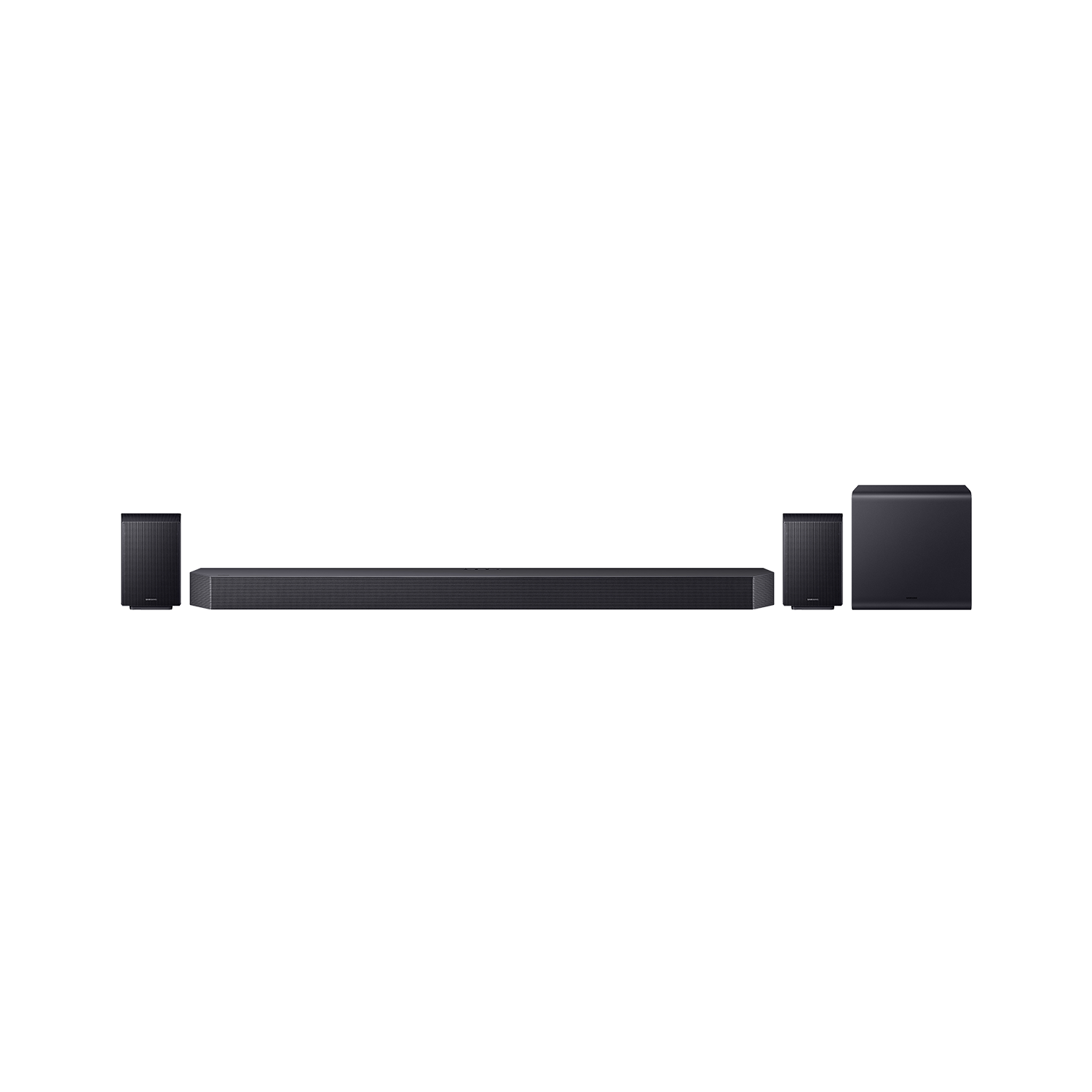
Samsung HW-Q990H

Best Flagship System
9.0/10

Our take

An 11.1.4 Atmos flagship with rear speakers and 4K 120 Hz passthrough; a small upgrade over its predecessor.

Pros

  • Full surround system in the box
  • 4K 120 Hz passthrough for consoles
  • Very strong Atmos effect
  • Room calibration

Cons

  • Few changes from the previous generation
  • Needs space and sockets for rear speakers

Full review

The HW-Q990H is Samsung's flagship, an 11.1.4 Dolby Atmos system with a wireless subwoofer and two wireless rear speakers included. It is the closest this list comes to a proper home cinema built around a television, with real surround behind the listener, height channels above and bass from the dedicated subwoofer. TechRadar says it still sets the benchmark for soundbars in 2026, and Xataka names it the choice for people who want a complete system. Gamers have a reason to look at it. Its two HDMI inputs support 4K at 120 Hz passthrough, which is rare on a soundbar and means a console can connect through the bar without losing its best picture settings. Samsung's room-correction and Q-Symphony features work with compatible Samsung televisions, and the wireless Atmos link needs a recent Samsung set. Its main drawback is that it changes very little from the previous generation, as Xataka points out, so buyers who can find the older model for less may be better served. It is also the biggest and most expensive system here, needs space for the rear speakers and a socket for each box, and does little for people in small rooms. Choose it if you have a living room large enough to take advantage of it, want the strongest surround effect and plan to game through the bar. If you do not need rear speakers, the Samsung HW-Q800D covers most of the experience for much less.

4

JBL Bar 1000MK2

Best for Atmos Surround
8.9/10

Our take

A 7.1.4 Atmos system with detachable battery-powered rear speakers and a wireless subwoofer; named best for Atmos by SoundGuys.

Pros

  • True 7.1.4 surround without wiring the room
  • Includes a large wireless subwoofer
  • Dolby Atmos and DTS:X
  • Night listening mode

Cons

  • Rear speakers need recharging
  • One of the larger and pricier options

Full review

The Bar 1000MK2 is the bar for people who want true surround without running cables to the back of the room. SoundGuys names it the best soundbar for Dolby Atmos, calling it a true 7.1.4 system, and its trick is a pair of detachable rear speakers that are battery powered. They sit on the ends of the bar until you want surround, then you put them behind your seat. They recharge when you snap them back. The bar also includes a 10-inch wireless subwoofer, and it supports both Dolby Atmos and DTS:X. That combination gives it a bigger, more enveloping soundstage than most single-bar systems, with a nighttime mode that lets the rear speakers keep the sound personal for one listener while the bar and sub stay quiet. The downsides are practical. Moving the rear speakers is a small chore, and the battery means they need recharging between sessions. It is also one of the larger and more expensive bars in this list, and its connection options are narrower than those of the flagship Samsung for gamers. It is a good fit for people who want surround without a wired install and who are happy to handle the rear speakers. It is less convenient than the Samsung systems, whose rear speakers stay in place, but it is more flexible if you want to change how you listen.

5

Hisense AX5125H

Best Budget Atmos
8.1/10

Our take

A budget 5.1.2 Atmos system with a wireless subwoofer and rear speakers; music streaming is Bluetooth only.

Pros

  • Complete Atmos system at an entry-level cost
  • Real upward-firing speakers
  • Wireless subwoofer and rear speakers included
  • Simple setup

Cons

  • Bluetooth-only music streaming
  • Less refined sound than the premium options

Full review

The AX5125H is the most affordable way into a complete Dolby Atmos system on this list. TechRadar picks it as the best budget Atmos system, and it earns the label with real upward-firing speakers rather than simulated height, plus a wireless subwoofer and wireless rear speakers. A 5.1.2 layout at this level is rare, and it gives a much bigger sound than a television or a basic bar. Setup is straightforward through HDMI eARC, and the bar is designed to be placed in a normal living room without extensive tuning. It is a good first step for anyone who wants real surround for films but does not want to spend on the premium brands. The compromises are where you expect them. TechRadar notes that music streaming is limited to Bluetooth, so there is no Wi-Fi or multiroom, and the sound is less refined and less clear than that of the Samsung and Sonos systems. Hisense has also launched a newer, bigger model, the AX5140Q, but the guides we compared recommend this one, so we have kept it. Choose it if you want to maximise surround and bass for the lowest outlay, and mostly watch films and series rather than listen to music. If you can stretch the budget, the Samsung HW-Q800D is a significant step up in sound quality and features.

6

Sony HT-S2000

Best Compact Budget
7.9/10

Our take

A compact 3.1 bar with built-in subwoofer and simulated Atmos; the best budget pick for small rooms.

Pros

  • Clear dialogue from a dedicated centre channel
  • Compact enough for small rooms
  • Can add a subwoofer and rear speakers later
  • Simple to use

Cons

  • Atmos is simulated, not upward-firing
  • No Wi-Fi or voice assistant

Full review

The HT-S2000 is the choice for a small living room or a bedroom where a big system would be out of place. TechRadar names it the best budget option. It is a compact 3.1 bar with a built-in dual subwoofer, a dedicated centre channel for clearer dialogue and HDMI eARC. It is Sony's cheaper take on the upmarket bars in the same range. Dialogue clarity is the headline benefit over a television's built-in speakers, and the bar fills a small room well. You can expand it later, because Sony sells an optional wireless subwoofer and optional rear speakers that connect to it. It has real limits. TechRadar notes that Atmos is simulated rather than produced by upward-firing speakers, so the sense of height is modest, and there is no Wi-Fi or voice assistant, only Bluetooth for music. It does not support Sony's 360 Spatial Sound Mapping, which the pricier bars in the range have. Sony also sells newer, more capable bars, but this one is what the guides we compared recommend for a small, affordable setup. Choose it if you want a simple upgrade over television speakers that does not take over the room. If you want real Atmos height or Wi-Fi streaming, the Hisense or Sonos models above are better matches.

Frequently asked questions

Do I need a soundbar with a subwoofer?

If you watch films and want to feel explosions and music rather than just hear them, yes. A bar with a separate wireless subwoofer produces noticeably deeper bass than any single bar, and it is the setup most buyers are happiest with. Small rooms and flats with thin walls can do well without one, especially if you mostly watch dialogue-heavy shows.

Is Dolby Atmos worth paying for on a soundbar?

It depends on how the bar delivers it. Models with real upward-firing speakers add a believable sense of height in a normal room with a reasonably low, flat ceiling. Bars that only simulate Atmos with processing make a smaller difference. Atmos also needs content that carries it, such as streaming films and recent discs.

What is HDMI eARC and why does it matter?

It is the HDMI port on your television that sends audio back to the soundbar at high quality. Unlike older ARC, it carries lossless formats and Dolby Atmos from the TV's own apps. Check that your television has an eARC port, usually labelled on one of its HDMI sockets, and that the bar uses it for the best results.

Can I add rear speakers later?

On many bars, yes, but not all. Some systems ship with rear speakers, others sell them as an option and a few cannot use them at all. If you plan to grow into surround sound, check which accessories your chosen bar supports before buying, since models from different brands are not interchangeable.

Buying guide

A soundbar is the quickest way to fix a flat-sounding television, but the category is crowded and the labels are confusing. Before comparing models, it helps to decide which of three families you need. All-in-one bars put everything in a single bar and suit small living rooms and renters. Bars with a wireless subwoofer add real low-end weight for films and are the best fit for most people. Systems with rear speakers, such as the flagship Samsung, come closest to a home cinema, but they need space for the extra boxes and a socket for each. Dolby Atmos is on almost every spec sheet, yet it means different things. Bars with upward-firing drivers bounce sound off the ceiling and can create a convincing sense of height in an ordinary room, while cheaper bars simulate it with processing and deliver a much smaller effect. Ceiling height and material matter, so a very high or sloped ceiling blunts the effect. Wireless Atmos over Wi-Fi on the Samsung bars also depends on having a recent Samsung television, so check that before buying. Connections deserve a look too. Every bar here connects to the television through HDMI eARC, which carries Atmos from the TV's own apps. Gamers should look for extra HDMI inputs with 4K 120 Hz passthrough, which only the flagship Samsung offers in this list; the Sonos has a single HDMI port and passes nothing through. If you care about music, Wi-Fi streaming and multiroom support on the Sonos matter far more than raw wattage, which manufacturers measure inconsistently and which tells you little about real-world sound. Our selection compares what the most reliable analyses conclude, and weighs availability for buyers in Spain. We favour bars that make clear speech and a convincing cinema feel at normal listening volumes, that are easy to set up, and that can grow later with rear speakers or a subwoofer. We have not credited any model with test results that nobody has published. Where a newer generation of a recommended bar exists, we say so in its entry and explain why we still point to the earlier one.

Ranking methodology

Each score out of 10 reflects what the analyses we compared conclude about sound quality, build and design, ease of use and value for money. For soundbars, sound quality and the completeness of the system for the money weigh most, followed by connectivity, since HDMI eARC and passthrough decide how well a bar fits a given television. Build matters less because most bars are similar. Scores are our own editorial judgement, not an average of other publications' ratings.

Sources consulted Based on Xataka, TechRadar, and SoundGuys

The reviews and data this ranking draws on. We do not run our own lab tests: we compare the findings of these publications.

Tags

More rankings you may like