RankingDeals
Electronics & Tech

6 Best Instant Cameras of 2026

We compare the 6 best instant cameras of 2026, from simple Instax Mini models to Polaroid squares and hybrid cameras with a screen.

By RankingDeals Updated: How we rank

As an Amazon Associate I earn from qualifying purchases. Advertising & Monetization Disclosure.

Quick answer

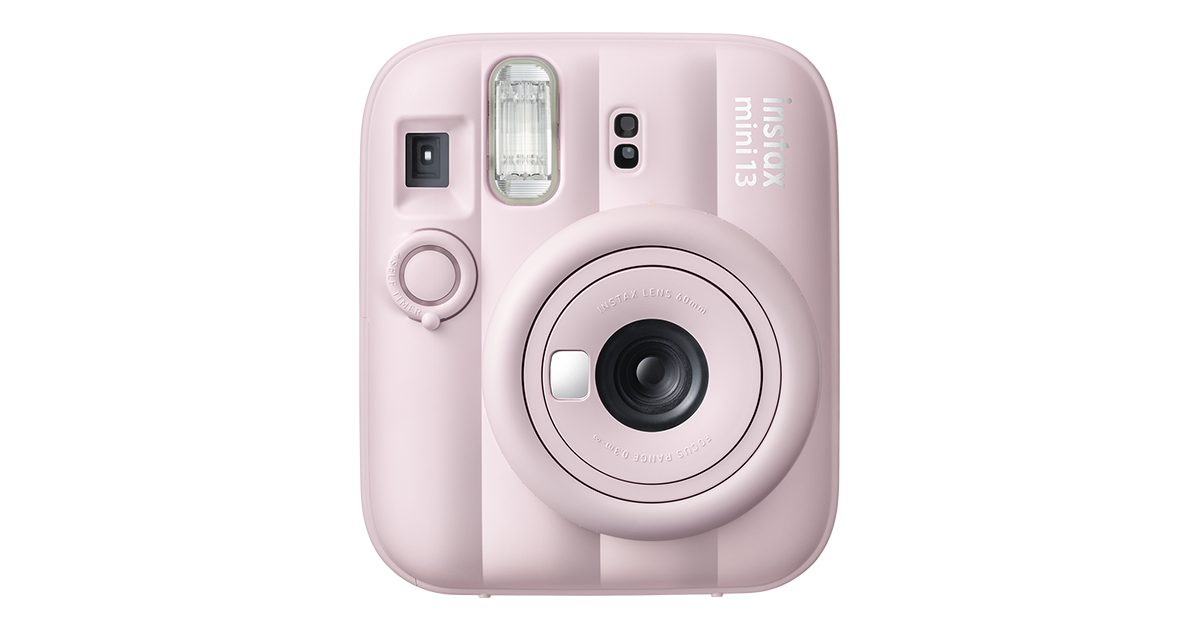
The best choice for most people is the Fujifilm Instax Mini 13 (9.2/10). Digital Camera World lists it as the affordable camera and film pick; it succeeds the Mini 12 recommended by Engadget and Xataka.

Check price on Amazon

Also worth a look: Fujifilm Instax Mini Evo (Best Hybrid); Polaroid Go Generation 2 (Most Portable); Polaroid Now Generation 3 (Best Square Prints).

Top picks at a glance

1

Fujifilm Instax Mini 13

Best Overall
9.2/10

Our take

Digital Camera World lists it as the affordable camera and film pick; it succeeds the Mini 12 recommended by Engadget and Xataka.

Pros

  • Very easy to use, with automatic exposure and flash
  • Film for the Instax Mini system is the most economical on this list
  • Ordinary AA batteries are easy to replace
  • A good first camera and an easy gift

Cons

  • No screen, so no preview before printing
  • No way to print photos from a phone

Full review

The Instax Mini 13 is the camera we would point most people to, because it does the basic job with the least fuss. Digital Camera World lists it first in its roundup as the affordable camera and film option, and it is the newest step in a line that Engadget and Xataka both recommended in its previous generation, the Mini 12. It is a fully analog point-and-shoot: you switch it on, frame the picture and press the button, and automatic exposure and flash take care of the rest. What makes it a sensible first instant camera is how little there is to learn. It has a close-up setting, a selfie mirror next to the lens, two self-timer options and a strap, and it runs on two AA batteries that are easy to replace anywhere. There is no screen to distract you and no app to pair, which is a large part of the charm for children, teenagers and anyone buying a gift. The Instax Mini format is also the most economical way into instant photography. The prints are small enough to slip into a wallet or pin to a wall, and film for the system is widely available and cheaper per shot than the square or wide alternatives. That matters more than the camera price over time. The compromises are the usual ones for a simple analog camera. You cannot review or edit anything before printing, there is no way to print from a phone, and the small prints show less detail than larger formats. The camera is also bulkier than the pocketable Polaroid Go. If you want a screen, a printer for phone photos or creative effects, look further down the list. For everyone else, this is the easiest recommendation.

2

Fujifilm Instax Mini Evo

Best Hybrid
9.0/10

Our take

Xataka ranks it first in its roundup, and Engadget calls it a premium runner-up.

Pros

  • Preview on a screen and print only the best shots
  • Doubles as a Bluetooth printer for phone photos
  • Many lens and film effects
  • Instax Mini film keeps running costs modest

Cons

  • The highest price among the models here
  • More menus and settings than an analog camera

Full review

The Instax Mini Evo is the hybrid for people who want the instant print but not the gamble. Xataka puts it first in its roundup under digital control and retro design, and Engadget names it its premium runner-up. It combines a digital sensor and a built-in printer: you frame on the rear screen, see the result, and print only the photos worth keeping. That changes how you use an instant camera. Instead of spending a sheet of film on every attempt, you can shoot freely, pick the best frames and print those. Xataka describes ten lens effects and ten film effects, internal memory for about 45 images plus a microSD slot, and a rechargeable battery charged over USB-C. It also works as a Bluetooth printer for photos stored on your phone, which turns it into a useful party tool as well as a camera. The costs are the ones you would expect. Xataka notes it has the highest price in its list and that you lose some of the spontaneous charm of a purely analog camera. Engadget adds that it is more complicated to operate than a point-and-shoot, with menus and effect dials that take a little time to learn. It uses Instax Mini film, so running costs stay modest once you own it. This is the camera we recommend if you want control and flexibility, or if you already know you will print selectively. If your main goal is the simplest possible camera for a child or a gift, the Mini 13 above is a better fit, and the Polaroid models below suit those who prefer a larger square print.

3

Polaroid Go Generation 2

Most Portable
8.8/10

Our take

Engadget names it the best basic instant camera, and Xataka picks it for portability.

Pros

  • Small and light enough to carry anywhere
  • Self-timer and double-exposure mode
  • Front selfie mirror
  • Charges over USB-C

Cons

  • Very small prints
  • Autofocus can be unreliable at close range

Full review

The Polaroid Go Generation 2 is the smallest camera in this ranking and the easiest to carry everywhere. Engadget calls it its best basic instant camera, praising its small, light body, and Xataka picks it as the portability choice. It is a simple analog camera, but it adds a few creative touches that the cheapest models skip. Its main selling point is size. Engadget gives the weight as 240 g, and Xataka describes it as very compact, with USB-C charging and a front mirror for selfies. It offers a self-timer and double-exposure mode, and Xataka lists a 34 mm equivalent lens and automatic exposure with shutter speeds from 1/300 to one second. The second generation improved on the original with a wider aperture range and more accurate exposure. The trade-offs are in the prints. The Go uses the smallest Polaroid film format, which gives photos around 4.7 by 4.6 cm. Xataka flags the small paper as its main drawback. Engadget also warns that autofocus is spotty unless the subject is a reasonable distance from the lens, so close portraits can come out soft. It is a good pick for travel, festivals or anyone who wants a camera that fits in a small bag, and it appeals to people who like the Polaroid look. Because the film is specific to the Go, remember that it is not interchangeable with the larger i-Type film used by the Now. If you want bigger prints, choose the Now, or the Wide 400 for the largest of all.

4

Polaroid Now Generation 3

Best Square Prints
8.6/10

Our take

Xataka includes it as the purist, large-format choice and notes its high cost per print.

Pros

  • Large square prints with the classic Polaroid look
  • Dual-zone autofocus and a better-placed light meter
  • Double exposure and a nine-second self-timer

Cons

  • The highest cost per print on this list
  • Larger and bulkier than Instax Mini cameras

Full review

The Polaroid Now Generation 3 is the pick for people who want the classic square Polaroid print, with its thick white frame, in the largest size on this list. Xataka includes it in its roundup as the purist, vintage choice and notes that its i-Type prints, at 7.9 by 7.9 cm, are the biggest among its recommendations. It is an automatic camera with a two-lens system and a dual-zone autofocus. Xataka highlights a better-placed light meter, a double-exposure mode and a nine-second self-timer, which together make it more flexible than the average point-and-shoot while staying easy to use. The prints have the soft, slightly dreamy look that makes people choose Polaroid over other brands. The honest drawback is cost. Xataka says it has the highest cost per print in its list, since i-Type film is considerably pricier than Instax Mini film. That is worth weighing against how much you will actually shoot: it is a lovely camera for occasional, deliberate photos and a less sensible one for taking dozens of pictures at a party. Note that this is the standard Now, not the Now+ with Bluetooth and an app, which is a different camera. It also costs more to run than the Instax models and is larger than the Polaroid Go. We rank it fourth because its beauty is balanced by the film cost, but for anyone who wants a big, characterful square print as a keepsake, it is the most satisfying camera in the ranking.

5

Fujifilm Instax Wide 400

Best Large Prints
8.3/10

Our take

Engadget names it its large-film runner-up, and Digital Camera World lists it for its wide format.

Pros

  • The largest prints in this ranking
  • One-button automatic shooting
  • Close-focus option for nearer subjects
  • Wide film is cheaper than Polaroid i-Type

Cons

  • Large and heavy
  • No digital features or phone printing

Full review

The Instax Wide 400 is for people who want the biggest prints. Engadget names it the runner-up in its large-film category and Digital Camera World lists it for its wide-angle format. The wide Instax film is far larger than the Mini and gives group shots, landscapes and events much more room, so it makes sense when detail and presence matter. Using it is easy. Engadget describes one-button, fully automatic shooting and a new close-focus option, with a camera weight of 616 g without batteries, strap or film cartridge. That makes it the heaviest and largest camera in this ranking, and it is better suited to a bag or a shoulder strap than a pocket. It runs on four AA batteries. Engadget points out that it has no hybrid or digital features, so you cannot preview or print from a phone. It also adds that Instax Wide film is cheaper than Polaroid i-Type, which makes the camera a more economical route to large prints than the square Polaroid models, although each sheet still costs more than a Mini one. Choose it for family gatherings, weddings and trips where the extra size will be appreciated. Do not choose it if you want something small or spontaneous, because it is bulky and the prints are not wallet sized. We rank it fifth because it is a more specialised tool than the cameras above: excellent at one thing, but a heavier commitment in size and film for people who just want an easy everyday camera.

6

Fujifilm Instax Mini 99

Best Creative Effects
8.1/10

Our take

Engadget lists it as an honorable mention, and Digital Camera World praises its in-camera creative effects.

Pros

  • LED colour effects make every print different
  • Flash can be turned off completely
  • Sports mode and double exposure
  • Premium retro design

Cons

  • Much more expensive than a basic Instax
  • No selfie mirror

Full review

The Instax Mini 99 is the analog camera for people who want to play with light and colour. Engadget lists it as an honorable mention for its four-colour LED effects, and Digital Camera World includes it for its in-camera creative effects. It has a vintage look and gives you more control than a basic Instax, without a screen or an app. The effects work by lighting the film with built-in LEDs, which tint the photo in a different way each time. The manufacturer's specifications add focus modes, brightness control, and shooting modes including double exposure. Engadget adds that the flash can be switched off completely and that there is a sports mode, which is useful if you shoot movement or want a natural look in dim light. It uses Instax Mini film, so it has the same cost per print as the other Mini cameras, and the prints are the same small size. The drawback is the learning curve and the price: it is much more expensive than the Mini 13 and, Engadget notes, there is no selfie mirror. The battery details are not consistent across sources, so check the model you are buying. This is a camera for photographers who want to experiment and who find a plain point-and-shoot too limiting. It does not have the preview and printing flexibility of the Mini Evo, but it keeps the surprise of film. For a first instant camera or a child, the simpler Mini 13 is the better buy.

Frequently asked questions

Instax or Polaroid: which should I choose?

Choose Instax Mini if you want small prints, simple operation and film that is cheaper to run. Choose Polaroid if you prefer the square format with the classic thick frame and accept that film costs more per print. The two systems use different film, so a camera from one brand cannot use the other's cartridges. Think about how often you will shoot, because film is what you keep buying for as long as you own the camera.

What is a hybrid instant camera?

A hybrid camera combines a digital sensor with a built-in printer. You frame the shot on a screen, can store photos in memory or on a card, and print only the ones you like. Many also act as a phone printer over Bluetooth. The trade-off is a higher price and a more complicated interface compared with a purely analog camera, where every press of the shutter uses a sheet of film.

How long does an instant photo take to develop?

Most instant film shows an image within a minute and finishes developing in a few minutes. Colours and contrast keep settling during that time. Keep the print away from strong light while it develops, do not shake it, and avoid extreme heat or cold both before and after shooting, because temperature affects how the chemistry works and can give washed-out or tinted results.

Do instant cameras work well indoors?

Yes, as long as the flash can reach your subject. Most models fire the flash automatically in dim rooms, and a few have modes for close-ups or low light. Stay within the recommended distance, usually between about half a metre and a few metres, because subjects that are too close or too far away come out blurry or badly exposed. Bright, even light always gives the best prints.

Buying guide

An instant camera does something no phone can: it hands you a physical photo a minute after you press the shutter. That small ritual is why these cameras keep selling, and why the category is a favourite for birthdays, weddings, trips and teenagers' bedrooms. But the market is wider than it looks. Some models are simple point-and-shoot boxes, others are hybrids with a screen and a printer built in, and the film formats are not interchangeable, so the choice you make today also fixes what you will pay for film for years. We compared the recommendations of independent photography and technology outlets and focused on the models that are currently sold in Spain. The first thing to decide is the print size. Instax Mini prints are small, wallet sized and the cheapest to run. Polaroid i-Type and Go prints are square, with the classic thick white frame. Instax Wide prints are the largest and show the most detail in group shots. The second decision is how much control you want: a fully automatic analog camera is the easiest and most spontaneous, while a hybrid lets you frame on a screen and print only the shots you like, at the cost of a higher price and more menus. Running costs deserve as much attention as the camera itself. Film is the real expense, and it is the part that differs most between systems; Instax Mini film is generally the more economical, while Polaroid film is the most expensive per print. Batteries matter too: some cameras use ordinary AA cells, others charge over USB-C. Finally, instant film does not like heat or light before it develops, so keep prints face down for a moment and avoid shaking them. Our ranking weighs ease of use, print quality, build, versatility and value according to what the reviews we consulted conclude. Whichever you pick, check that the film format matches before you buy a pack.

Ranking methodology

Our score is an out-of-ten assessment that weighs what the reviews we consulted conclude about print quality, build, ease of use and value for money. For instant cameras, ease of use and cost of running the system weigh the most, because most people want a camera they can pick up and use. Build and versatility matter more for the hybrid and wide-format models, where you pay for extra capability. Where a criterion does not apply, such as a screen on an analog model, we look at how well the camera does the simple job it is designed for.

Sources consulted Based on Engadget, Xataka, Digital Camera World, and 1 more

The reviews and data this ranking draws on. We do not run our own lab tests: we compare the findings of these publications.

Tags

More rankings you may like