Baby & Kids

6 Best Baby Carriers of 2026

Compare the 6 best baby carriers of 2026, from newborn wraps to structured toddler carriers, with weight ranges, positions and pros and cons.

By RankingDeals Updated: How we rank

As an Amazon Associate I earn from qualifying purchases. Advertising & Monetization Disclosure.

Quick answer

The best choice for most people is the Ergobaby Omni Deluxe (9.2/10). Babylist names it the best structured carrier overall: four positions, birth to about four years, breathable options, at a premium.

Check price on Amazon

Also worth a look: BabyBjörn Harmony (Best Breathable Comfort); Manduca XT (Best for Long Use); Ergobaby Embrace (Best for Newborns).

Top picks at a glance

1

Ergobaby Omni Deluxe

Best Overall
9.2/10

Our take

Babylist names it the best structured carrier overall: four positions, birth to about four years, breathable options, at a premium.

Pros

  • Newborn to toddler with no separate insert
  • Wide, padded lumbar support spreads the load
  • Recognised as hip-healthy by the International Hip Dysplasia Institute
  • Breathable mesh and linen versions for summer

Cons

  • Some positions are fiddly to adjust
  • Premium cost and thin straps for some wearers

Full review

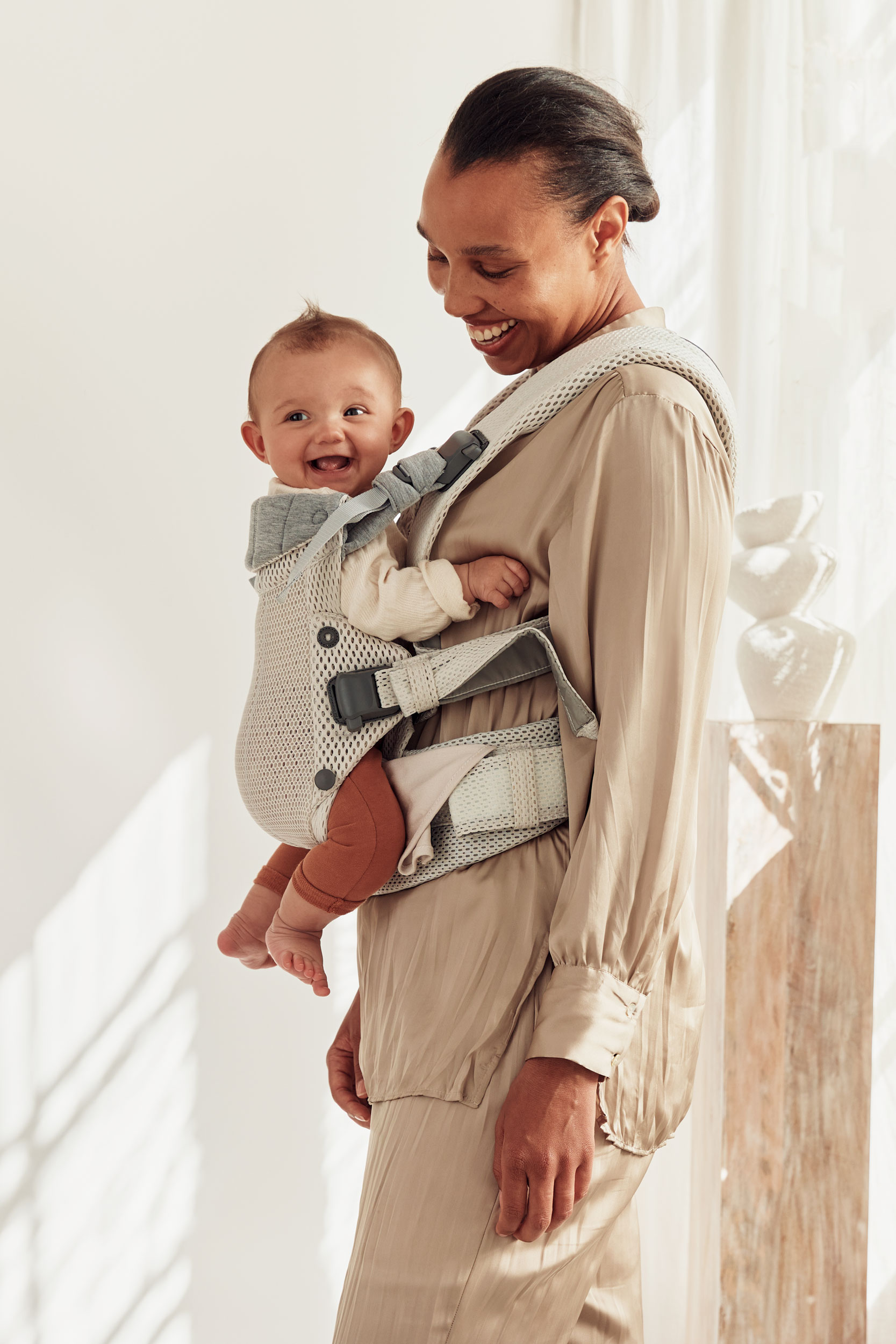
The Ergobaby Omni Deluxe is the carrier that reviewers keep returning to when they need one product to last from birth to toddlerhood. Babylist names it its best structured carrier overall, and the manufacturer rates it for babies from 3.2 to 20.4 kg, which in practice covers roughly the first four years. It offers four carry positions: facing in, facing out, on the hip and on the back, and it works for a newborn without a separate infant insert. What sets it apart is how much adjustment it offers. The padded shoulder straps can be worn crossed or uncrossed, the lumbar support in the waistband is wide and padded, and the headrest changes between three modes as the child grows. Babylist highlights the lightweight, breathable fabric options, which matter in warm weather, and the carrier is available in cotton, mesh and linen versions. The manufacturer says it is machine washable and that the International Hip Dysplasia Institute recognises it as hip-healthy. The compromises are real. The same guide notes that some positions can be fiddly to put on and adjust, that some wearers find the shoulder straps thin, and that it is an expensive purchase. If you plan to share the carrier between two adults of very different sizes, you will also spend a few minutes readjusting every time. For most families who want a single, long-lasting carrier with every position they might need, those drawbacks are worth accepting, which is why it leads our list. The button on this page links to the Omni Deluxe version. Try the front and back carries before the baby gets heavy so the straps feel familiar.
2

BabyBjörn Harmony

Best Breathable Comfort
9.0/10

Our take

Successor to the One that BabyGearLab rated best overall in 2025: breathable mesh, easy to use, lower weight limit.

Pros

  • Airy 3D mesh keeps parent and baby cooler
  • Quick to put the baby in
  • Seat adjusts as the child grows
  • Compact for travel

Cons

  • Lower weight limit than the longest-lasting carriers
  • Synthetic fabric is less cosy in winter

Full review

The BabyBjörn Harmony is the current successor to the BabyBjörn One, the carrier that BabyGearLab chose as its overall best in its 2025 tests. BabyBjörn says it retired the One and points buyers to the Harmony, so this entry reflects the newer model, which keeps the same approach: a lightweight, structured carrier that is quick to use. The Harmony is made of airy 3D mesh and, according to the listings we checked, offers four positions, from newborn to facing outward and on the back, for children up to about 15 kg. BabyGearLab praised the One for its adjustable seat width, for how easy it is to put the baby in, and for comfort for the parent. Those are the qualities that carry over to the Harmony's design philosophy, and they explain why this model is a favourite for short outings, walks and travel. The mesh keeps both of you cooler on warm days, and the carrier packs down smaller than most structured rivals. The review also noted the downsides of the One: synthetic materials and being harder to keep clean. A mesh model is not as cosy as thick cotton in winter, and its maximum weight is lower than that of the Ergobaby Omni Deluxe or the Manduca XT, so a tall toddler will outgrow it sooner. If your priority is a comfortable, breathable carrier for the first couple of years, it is an excellent choice and our pick for the best mesh model. Check the weight limit against your child's growth before buying, and note that its test record comes from its predecessor rather than from independent testing of the Harmony itself.

3

Manduca XT

Best for Long Use
8.9/10

Our take

Diez Minutos lists it first: adjustable seat, organic cotton, birth to 20 kg, but bulkier and warmer.

Pros

  • Seat width adjusts continuously from 16 to 50 cm
  • Insert for newborns is included
  • Soft organic cotton fabric
  • Holds heavy toddlers comfortably

Cons

  • Bulkier and warmer than mesh models
  • Takes time to learn all the adjustments

Full review

The Manduca XT is a buckle-based structured carrier from a German brand and tops the Diez Minutos list of mochilas portabebés. The manufacturer rates it from 3.5 to 20 kg, so it takes a baby from the first weeks to a sturdy toddler, and it can be worn on the front, on the hip and on the back. Its signature feature is a seat that adjusts continuously in width, from 16 to 50 cm according to the brand, together with a back extension that you raise as the baby grows. That lets you keep the legs in the natural spread position at every age. The ZipIn insert is included, so you do not need to buy an accessory for a small newborn, and the fabric is organic cotton, which is soft against the skin. Diez Minutos highlights its simple, buckle-free design and the three carry positions, and it is a popular choice for families who carry for long periods every day. The weight is spread between hips and shoulders, which helps with long walks. The trade-offs are practical. It is bulkier than mesh carriers and warmer in summer, the many adjustments take a little time to learn, and the premium fabric is not the cheapest. Check that the fabric colour you pick is the cotton version and not a limited edition with a different finish. If you want a carrier that will serve you for years with a very adjustable seat, the Manduca XT is the best choice for long-term use on this list. Try the adjustments at home before heading out.

4

Ergobaby Embrace

Best for Newborns
8.7/10

Our take

Babylist names it the best for newborns: soft knit, wide waistband, but a low maximum weight and no pockets.

Pros

  • Very soft, newborn-friendly fabric
  • Wide waist strap fits many adult sizes
  • Slim and easy to pack
  • Padded head and neck support

Cons

  • Low maximum weight
  • Does not suit the smallest newborns and has no pockets

Full review

The Ergobaby Embrace is a soft, stretchy carrier designed for the first months, and Babylist names it its best carrier for newborns. It is made of a super-soft knit fabric, is certified Öko-Tex 100 according to the listing, and can be used from birth. The minimum weight is around 3.2 kg and the maximum is about 11.3 kg. The main attraction is how gentle it feels. The adjustable seat and the padded head and neck support make it easy to hold a tiny baby in the frog-leg position facing inward, and the manufacturer says no separate infant insert is needed. Babylist also notes that its wide waist strap suits a broad range of adult sizes, and it is slim enough to carry in a bag. It has limits. Babylist points out that it does not work well with the smallest newborns, that it has no pockets, and that its maximum weight is low, so most children outgrow it within the first year. The knit fabric is warmer than mesh, and it offers only the front positions. That makes it a focused choice rather than a one-carrier solution. If you want the most comfortable way to carry a newborn for the first months and you are happy to move on to a larger model later, it is a very good option, and it ranks fourth because of its shorter life. Many families pair it with a convertible carrier such as the Omni Deluxe afterwards. Always confirm the minimum weight on the manufacturer's page before using it with a small or premature baby, and ask your pediatrician if you are unsure.

5

Infantino Flip Advanced 4-in-1

Best Budget Pick
8.1/10

Our take

Babylist calls the Flip its most affordable carrier: four positions, bib included, but thin padding for long wear.

Pros

  • Four carry positions at a modest cost
  • Seat width adjusts
  • Bib protects the carrier and clothing
  • Light and easy to pack

Cons

  • Smaller babies often need extra support
  • Less comfortable for long carries as the child grows

Full review

The Infantino Flip Advanced 4-in-1 is the carrier that proves you do not need to spend a lot to get several positions. Babylist names an Infantino Flip carrier its most affordable pick, and Diez Minutos also includes the Flip 4-in-1 in its list of mochilas portabebés. The manufacturer rates the Advanced version for babies from 3.6 to 14.5 kg and lists four positions: facing in for infants, facing in with a wider seat, facing out and on the back. It includes a 2-in-1 bib to protect clothing and the carrier, a waist belt that moves weight to the hips, and the manufacturer says it is machine washable. The seat can be adjusted in width, which helps keep a growing baby in a comfortable posture, and the carrier is light enough to keep in a bag for occasional use. The compromises are the typical ones for this price bracket. Babylist notes that smaller babies often need extra support, and that it becomes less comfortable as the child grows. The padding is thinner than on premium models, so it suits shorter outings better than all-day wear, and the back carry is best kept for older babies with good control. It is also the ideal second carrier for grandparents or for travel, where you do not want to hand over a premium model. Look at the exact model name when you buy: Infantino sells several Flip variants with different weight ranges. For a family on a budget that wants to try babywearing without a large outlay, it is an easy recommendation, but if you plan to carry for hours every day, one of the models above will be kinder to your shoulders.

6

Chicco EasyFit

Simple Newborn Option
7.8/10

Our take

Diez Minutos lists it as simple and intuitive with head support for newborns, but the 9 kg limit is short.

Pros

  • Easy to put on like a vest
  • Top folds to support a small baby's head
  • Adjustable seat keeps the M position
  • Recognised as hip-healthy by the International Hip Dysplasia Institute

Cons

  • 9 kg limit is outgrown quickly
  • Front positions only, with less padding

Full review

The Chicco EasyFit is a simple ergonomic carrier for the first months, listed in the Diez Minutos selection of mochilas portabebés. Chicco rates it from birth to 9 kg and says the International Hip Dysplasia Institute recognises it as hip-healthy. It has a wide, adjustable seat that keeps the legs in the natural M position, and the baby can be carried facing you or facing out. Diez Minutos highlights how intuitive it is: it goes on like a vest, and the seat width is adjusted with a central cord. For tiny babies, the top folds to support the head and neck, which is reassuring for first-time parents who worry about a newborn's head control. The listing indicates that the most recent version is machine washable, while an older version needed hand washing, so check which one you are buying. The limits are clear. A 9 kg ceiling means most babies will outgrow it somewhere around the middle of the first year, and it offers only front positions, so there is no back carry for a toddler. Some buyers find it warm for summer because of the fabric, and it has less padding than the structured models above. For that reason it sits at the bottom of our ranking, though it is a sensible purchase if you only need a carrier for the early months and want something easy to use. It is also a good loan for relatives who carry the baby now and then. If you expect to carry beyond the first year, spend a little more on a convertible model such as the Manduca XT or the Omni Deluxe. Always check your baby's weight against the stated limit.

Frequently asked questions

When can I start using a baby carrier?

It depends on the model. Newborn-ready carriers such as the Ergobaby Embrace or the Chicco EasyFit state a minimum weight from birth, while others need a separate insert or a minimum age. Always follow the manufacturer's stated minimum weight and height, make sure the baby's head and neck are supported, and ask a pediatrician if your baby was born early or has low weight.

How do I know a carrier is good for my baby's hips?

Look for a seat wide enough to support the thighs from knee to knee, so the legs sit in a spread squat with the knees higher than the bottom. Some manufacturers have their designs recognised by the International Hip Dysplasia Institute. If your baby has a diagnosed hip condition, ask your pediatrician or orthopaedist before choosing a carrier.

Structured carrier or wrap: which should I choose?

Wraps are soft and snug for newborns but have a learning curve and a lower weight limit. Structured carriers use buckles and padded straps, are quicker to put on and carry heavier children more comfortably. If you want one carrier for years, a convertible structured model is usually the practical choice, while a wrap suits the first months.

Can I carry my baby facing outward?

Outward-facing carries are only suitable once the baby has good head and neck control, which manufacturers and Ergobaby's own guidance place at around five to six months, although every child develops differently. Many parents find that inward-facing carries are calmer and more comfortable for longer, so use the outward position for short periods.

How do I keep my baby safe in a carrier?

Keep the baby's airway clear, with the chin off the chest and the face visible at all times. Hold the baby high on your chest, close enough to kiss the head, and support the back. Avoid cooking, cycling or anything that could cause a fall while wearing it, and check buckles and straps before every use.

Buying guide

A baby carrier is one of the few pieces of baby gear that you use every single day for months, so comfort for the adult matters just as much as comfort for the child. The best models spread the load across hips and shoulders, hold the baby in a natural seated posture with the knees higher than the bottom, and let you adjust the fit as the child grows. Those are the criteria we weighed when comparing independent buying guides and manufacturer data for this list. The first decision is age. Newborn-focused carriers such as the Ergobaby Embrace and the Chicco EasyFit are soft, simple and made for the first months, but they top out at a low weight. Convertible structured carriers such as the Ergobaby Omni Deluxe, the BabyBjörn Harmony and the Manduca XT cover the whole journey from birth to toddlerhood and add hip and back carries, which matter once your child gets heavy and curious. A budget convertible such as the Infantino Flip Advanced 4-in-1 sits in between: it offers many positions for a modest outlay, with some compromises in padding. Next comes fit on the adult. A wide, padded waist belt takes most of the weight, and shoulder straps that cross or adjust easily help people of different builds. Breathable mesh or lightweight cotton makes a real difference in a Spanish summer, while thicker cotton is cosier in winter. Washability is worth checking too, because carriers collect milk, drool and crumbs quickly. Safety deserves attention whatever you choose. Keep the baby's face visible and clear of fabric, keep the chin off the chest, hold the baby high enough to kiss the top of the head, and support the back so the spine keeps its natural curve. Do not use any carrier while cooking, riding a bike or doing anything that could cause a fall, and check straps and buckles regularly. Follow each manufacturer's minimum weight and the guidance on when to start outward-facing or back carries. Our ranking reflects what reviewers such as Babylist and BabyGearLab found, what Spanish buying guides highlight, and what the manufacturers publish about weight ranges and positions. Only models with a listing on the Spanish market made the cut. Whichever you pick, try it on with your own body and your baby before relying on it for long walks. This ranking helps you choose a baby carrier, but it does not replace the advice of a pediatrician or midwife, especially for premature babies, newborns with low weight or babies with hip or breathing concerns.

Ranking methodology

Our score out of 10 weights what the reviews we consulted conclude about comfort for the wearer, ergonomic support for the baby, build quality and ease of use, plus value for money. For baby carriers, comfort over long periods and the safety of the baby's posture weighed most, followed by how long the carrier stays useful as the child grows. Where a model is aimed at newborns only, we judged it for that job and let its short usable life count against its position.

Sources consulted Based on Babylist, BabyGearLab, Diez Minutos, and 1 more

The reviews and data this ranking draws on. We do not run our own lab tests: we compare the findings of these publications.

Tags

More rankings you may like