RankingDeals
Home & Kitchen

6 Best Super Automatic Coffee Machines of 2026

The 6 best super automatic coffee machines of 2026 compared: bean hoppers, milk systems, upkeep and who each one suits best.

By RankingDeals Updated: How we rank

As an Amazon Associate I earn from qualifying purchases. Advertising & Monetization Disclosure.

Quick answer

The best choice for most people is the De'Longhi Rivelia EXAM440.55 (9.2/10). Dual hoppers, four profiles and automatic milk make it the most complete package, at the cost of a higher price.

Check price on Amazon

Also worth a look: Jura E8 (Best for Low Upkeep); Philips 5500 LatteGo EP5544 (Best for Easy Cleaning); De'Longhi Dinamica Plus ECAM370.85.SB (Best for Personalising).

Top picks at a glance

1

De'Longhi Rivelia EXAM440.55

Best Overall
9.2/10

Our take

Dual hoppers, four profiles and automatic milk make it the most complete package, at the cost of a higher price.

Pros

  • Switch between two coffees or caffeine and decaf in seconds
  • Automatic milk carafe handles hot and cold milk recipes
  • Compact for such a full-featured machine
  • Learns your habits through user profiles

Cons

  • Milk carafe takes some effort to clean
  • Expensive next to simpler De'Longhi machines

Full review

The Rivelia is the machine we recommend to most households, because it removes the main compromise of super automatic coffee: being stuck with one bean. Its two interchangeable bean containers let you swap between, for example, a morning roast and a decaf, or two different blends, without emptying a hopper. Seattle Coffee Gear highlights this dual-hopper design as something usually found on far more expensive commercial machines, and also notes that the Rivelia stays compact for what it does. Customisation is the other strength. TechRadar's review describes four user profiles and extensive personalisation, along with the Bean Adapt system that adjusts the grind and brew settings for each type of bean. Drinks are chosen on a colour touchscreen, and the LatteCrema carafe heats and froths milk automatically for cappuccinos and lattes, with cold milk recipes available as well. For a family where everyone drinks something different, that variety is the point. There are caveats. Tom's Guide found it a little pricey compared with De'Longhi's other super automatics and noted it cannot make cold espresso. Like every machine with a milk carafe, it needs rinsing and cleaning after milk drinks, and reviewers describe the carafe as well designed but fiddly to clean. The espresso is very good rather than perfect, which is true of super automatics generally. Buy it if you want the broadest all-round package and will actually use the profiles and the second hopper. If you drink one coffee type and rarely use milk, one of the simpler machines below will do the job for less. The listing we link to is the version with the automatic LatteCrema carafe.

2

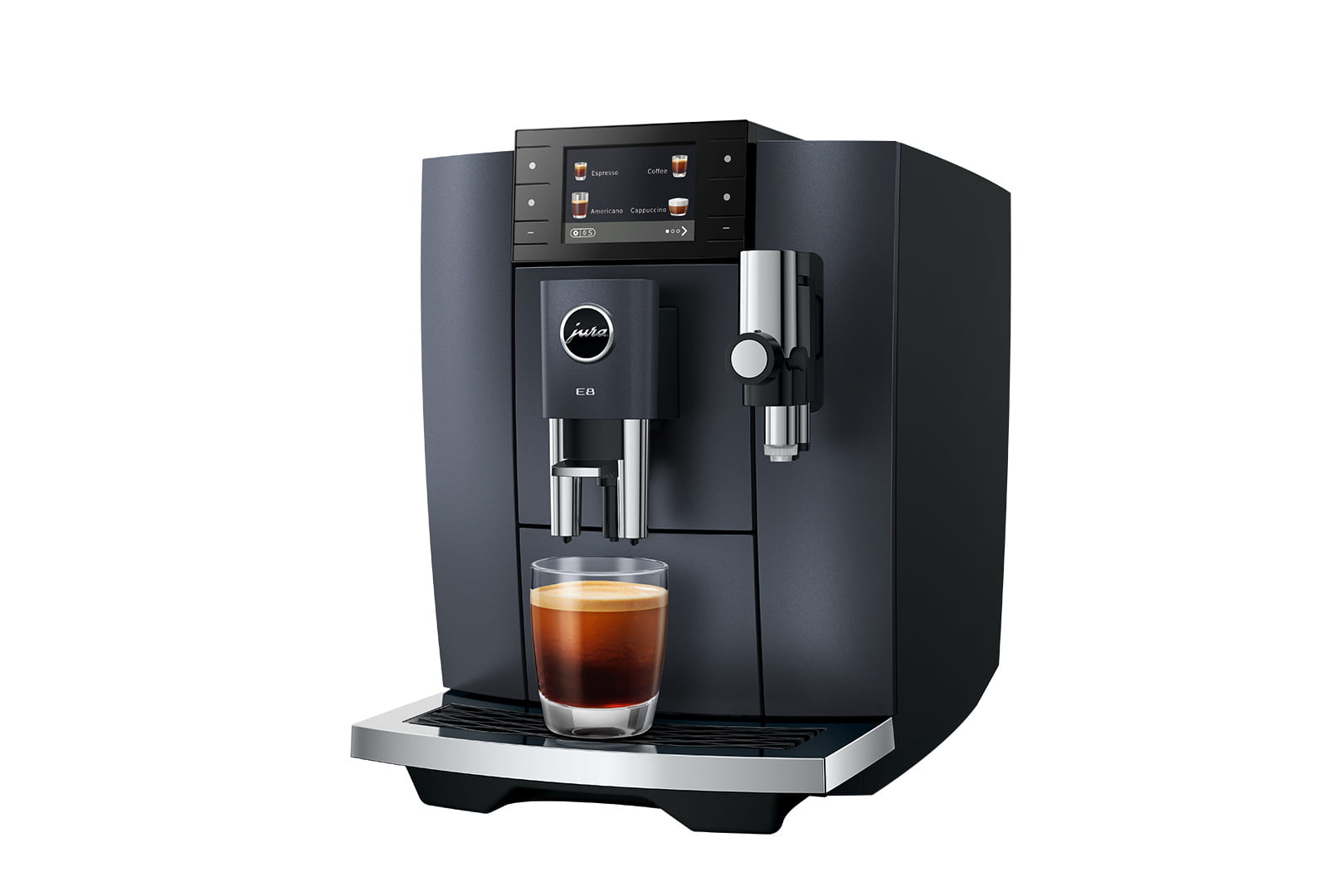
Jura E8

Best for Low Upkeep
9.0/10

Our take

Rich espresso, low upkeep and a capable plant-milk frother, in a premium package.

Pros

  • Rich espresso from Jura's Pulse Extraction Process
  • Low day-to-day upkeep
  • Frother works well with oat, soy and almond milk
  • Intelligent water filter helps manage maintenance

Cons

  • Premium machine with a higher outlay than mainstream options
  • Versions differ in features, so check the exact model before ordering

Full review

The Jura E8 is the machine for people who want excellent coffee with as little hassle as possible. Seattle Coffee Gear names it its honorable mention, praising the rich espresso that comes from Jura's Pulse Extraction Process, its low upkeep and a milk frother that works well with oat, soy and almond drinks. That combination of taste and easy ownership is what puts it second here, just behind our overall pick. Day to day, the E8 leans on automation. An intelligent water filter helps the machine manage its own maintenance, so you spend less time deciding when something needs attention, and the programming options let you set each drink to your taste. With a bean hopper of around 280 g and a 1.9 litre water tank, it suits a household that makes several coffees a day without constant refilling. Where it gives ground is price and flexibility. It is a premium machine, so it costs noticeably more than mainstream super automatics, and it does not offer the dual-hopper trick of the Rivelia. Several versions of the E8 are sold with different specifications, such as the number of drinks and connectivity, so read the details of the exact model you are buying rather than assuming every E8 is identical. Choose the E8 if coffee quality and easy ownership matter more than the longest feature list, and you are happy to pay for a machine built to be lived with for many years. If you want the widest drink menu or a lower outlay, the Philips and De'Longhi models below are the better fits.

3

Philips 5500 LatteGo EP5544

Best for Easy Cleaning
8.8/10

Our take

Quiet, simple to clean and generous with drinks, though less flexible than the top two.

Pros

  • LatteGo milk system has no tubes and only two parts to rinse
  • Ceramic grinder is quieter and gentle on the beans
  • SilentBrew reduces noise
  • Four user profiles for a shared household

Cons

  • Not as customisable as the Rivelia
  • Only one bean hopper

Full review

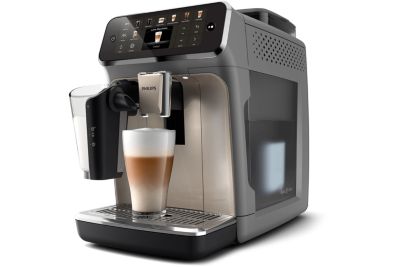
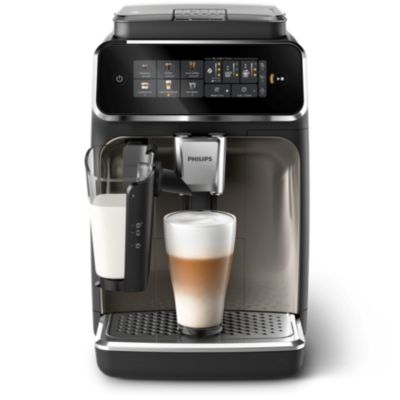
The Philips 5500 LatteGo is the best choice for anyone whose main objection to a super automatic is the cleaning. Its LatteGo milk system has no tubes and only two parts, which rinse quickly under the tap, so the daily routine after a latte is short. Because we are comparing machines for everyday family use, that matters as much as raw coffee quality. The rest of the specification is strong for a mainstream machine. It offers 20 hot and cold drinks, a ceramic grinder, and up to four user profiles, so different members of the household can save their own strength and size settings. Its SilentBrew feature is designed to reduce brewing noise, which helps in an open-plan kitchen or if you make coffee early in the morning. We place it third because it has fewer premium touches than the two machines above. There is a single bean hopper, so switching to decaf means emptying and refilling, and it does not have the profile-learning and bean-adaptation tricks of the Rivelia. We could also not base our assessment on a full hands-on review of this exact model, so our score leans on its specification and on what reviewers say about the wider Philips LatteGo range. Pick this machine if you want a wide drink menu, quiet operation and fast cleaning without paying for a flagship. Anyone who wants to switch beans often or likes to tinker with every setting will be happier with the Rivelia or the Dinamica Plus.

4

De'Longhi Dinamica Plus ECAM370.85.SB

Best for Personalising
8.6/10

Our take

A well-equipped, customisable all-rounder with an app, held back only by age.

Pros

  • Colour touch display is easy to navigate
  • Companion app lets you create custom drinks
  • Automatic milk system for cappuccinos and lattes
  • Wide range of grind settings

Cons

  • Older design than the Rivelia
  • Milk carafe needs regular cleaning

Full review

The Dinamica Plus is the tinkerer's choice among the machines here. It combines a 3.5 inch colour touch display with a companion app, so you can build and save your own drinks and adjust them to taste instead of living with factory settings. For someone who enjoys dialling in strength, volume and milk ratios, that flexibility is the main draw. The hardware supports it. The built-in steel grinder offers 13 grind settings, so you can fine-tune the extraction to the beans you buy, and the LatteCrema milk system delivers dense foam for cappuccinos and lattes at the touch of a button. A 1.8 litre water tank keeps refills infrequent. As OCU notes in its buying guidance, a steel grinder is faster, which suits households with several drinkers. Its position at fourth reflects age and competition rather than any particular flaw. It belongs to an earlier generation than the Rivelia and lacks that machine's second hopper and profile learning, and as with every machine with a milk carafe, you must rinse and clean it after milk drinks. We did not find a recent full review of this exact version, so our assessment relies on the manufacturer's specification and on how consistently it appears in guides to the best machines of 2026. Choose the Dinamica Plus if you want automatic milk, a clear interface and the ability to personalise drinks through an app, and you are not paying for the newest features. If you drink only a couple of simple coffees, the simpler Magnifica Evo below will be easier to live with.

5

De'Longhi Magnifica Evo ECAM290.83.TB

Best Value
8.4/10

Our take

A proven, compact all-rounder that rewards a bit of tuning.

Pros

  • Two espressos can be brewed at the same time
  • Compact footprint
  • Simple interface for everyday drinks
  • Automatic milk for lattes and cappuccinos

Cons

  • Fewer drinks and less customisation than the models above
  • Results improve once you adjust the settings

Full review

The Magnifica Evo is the sensible, no-nonsense choice. The Magnifica Evo line is a perennial favourite in buying guides: Expert Reviews rated the Magnifica Evo One Touch, a closely related model, a Best Buy and called it the best-value bean-to-cup machine. Our pick is the ECAM290.83.TB with the LatteCrema milk carafe, which is a different version, so treat that praise as a guide to the range rather than this exact variant. What you get is the essentials done well: seven one-touch recipes on a colour touchscreen, an automatic milk carafe for cappuccinos and lattes, and the ability to brew two espressos at once. It is a compact machine, which suits smaller kitchens. For a couple or a small family that wants fresh coffee every morning, it covers the ground without the complexity of the flagship models. The compromise is flexibility. Expert Reviews noted that the Evo One Touch needs some tweaking to get the best out of it, and the same is true here: spend a little time adjusting the grind and strength to your beans and the results improve noticeably. It has fewer recipes, no dual hopper and nothing like the personalisation of the Rivelia or the Dinamica Plus. That is why it sits fifth despite being easy to recommend. It is the one to choose if you want a respected, simple machine with automatic milk and are happy to spend a few minutes tuning it. If you want a long drink menu or rapid cleaning, look higher up the list.

6

Philips 3300 LatteGo EP3347/90

Best Entry-Level
8.2/10

Our take

A quiet, easy-to-clean starter machine that trades range for simplicity.

Pros

  • Very quiet in operation
  • Tasty espresso for the class
  • Easy to clean thanks to LatteGo
  • Ceramic grinder with 12 settings

Cons

  • Only six drinks
  • Coffee volume is hard to adjust

Full review

The Philips 3300 LatteGo is where we point people who want a super automatic without the complexity or the outlay of the machines above. It offers six drinks, a ceramic grinder with 12 grind settings and the tube-free LatteGo milk system, which keeps cleaning to a minute or so after milk drinks. It is also designed to run quietly thanks to the SilentBrew system. Coffeeness reviewed the sibling EP3347/90 and listed the machine's pros as very quiet operation, tasty espresso and easy cleaning. That matches what the specification suggests: this is a machine built for people who want good coffee without a manual. It is compatible with the AquaClean filter, which reduces how often you need to descale. It sits last because the compromises are real. Coffeeness also lists inaccurate marketing and hard-to-adjust coffee volume among the cons, and with six drinks and a single hopper it lacks the range of the others. Our assessment relies on that review of the sibling model and on the specification, since we did not find a full review of this exact variant. Choose it if you are new to bean-to-cup, drink mostly espresso, americano and milky coffees, and value a quiet, easy-to-clean machine over a big menu. If you outgrow it, the Philips 5500 above is the natural upgrade within the same family.

Frequently asked questions

What is the difference between a super automatic machine and a semi-automatic one?

A super automatic machine grinds the beans, doses, tamps, brews and usually froths milk by itself, so one touch gives you a finished drink. A semi-automatic machine leaves grinding, tamping and often milk steaming to you. It offers more control and a steeper learning curve, while super automatics trade some of that control for speed, consistency and ease.

Are ceramic or steel grinders better?

Ceramic burrs tend to be quieter, more consistent and less likely to heat the beans, which helps flavour. Steel burrs grind faster and cope better with heavy daily use, such as in an office. For a household making a few coffees a day either works well, so the brand's overall build and your ability to adjust the grind matter more.

How often do I need to clean and descale one?

Rinse the milk system after every use that includes milk, empty the drip tray and grounds container every day or two, and run the brew-unit cleaning when the machine asks. Descale when the display prompts you; a compatible water filter can stretch the interval. Skipping these steps is the most common reason for poor coffee and breakdowns.

Can I use oily or flavoured beans?

It is best to avoid very oily dark roasts and flavoured beans, because the oils coat the grinder and clog the brew unit. Medium or medium-dark roasts work well in most machines. If you like dark roasts, clean the hopper and grinder more often and follow the manufacturer's advice on bean types.

Is a super automatic machine worth it compared with capsules?

If you drink several coffees a day, usually yes. Fresh beans cost less per cup over time than capsules and give more variety and control, as consumer groups such as OCU note. The drawbacks are the higher initial purchase and the extra cleaning. For occasional drinkers, a capsule machine can still be simpler.

Buying guide

A super automatic coffee machine does everything between the bean hopper and the cup: it grinds fresh beans, tamps, brews, and in most models froths the milk, all from a single touch. That convenience is why these machines have become the default choice for households that drink several coffees a day and do not want to learn barista technique. The trade-off is that they are more complex than a capsule machine, need regular cleaning and descaling, and the quality of the cup depends heavily on the grinder, the brew unit and the milk system. To build this ranking we compared what consumer organisations and specialist reviewers have published about the machines sold in Spain, and kept only models we could match to a listing here. We weighed coffee quality, ease of use, how much upkeep each machine demands, noise, and how well it suits different households. Spanish consumer group OCU points out that the grinder material matters: ceramic burrs tend to be quieter, more consistent and gentler on the beans, while steel burrs are faster and suit heavy use. It also advises checking whether the brew unit is removable, whether the milk system is automatic, and how large the water tank and bean hopper are. Milk is the biggest practical divide. Machines with an automatic carafe or a tube-free system give you cappuccinos at the press of a button, while models with a manual steam wand ask more of you but give you control. Cleaning time is the other hidden cost, which is why systems with few parts, such as Philips' LatteGo, are popular with people who hate scrubbing hoses. Our top pick balances all of this, and the rest of the list is chosen for specific needs: low-maintenance premium coffee, a quiet all-rounder, a connected machine you can personalise, a good-value classic, and an entry-level option. Whichever you choose, use fresh beans, set the grind to match them, and run the cleaning programmes when the machine asks. Descaling on schedule is what keeps any of these machines making good coffee for years.

Ranking methodology

Our score out of 10 reflects what the reviews and buying guides we consulted conclude about coffee quality, build and reliability, ease of use and value for money. In this category we gave the most weight to coffee quality, milk-system convenience and day-to-day upkeep, because those decide whether people keep using the machine. Where a criterion does not apply or evidence is thin, we lean on the manufacturer's specifications and the general guidance of consumer groups such as OCU.

Sources consulted Based on Expert Reviews, Seattle Coffee Gear, OCU, and 4 more

The reviews and data this ranking draws on. We do not run our own lab tests: we compare the findings of these publications.

Tags

More rankings you may like