Health & Personal Care

6 Best Upper-Arm Blood Pressure Monitors of 2026

Six upper-arm blood pressure monitors for home use in 2026, compared on accuracy, validation, cuff fit and smart features, with picks for every need.

By RankingDeals Updated: How we rank

As an Amazon Associate I earn from qualifying purchases. Advertising & Monetization Disclosure.

Quick answer

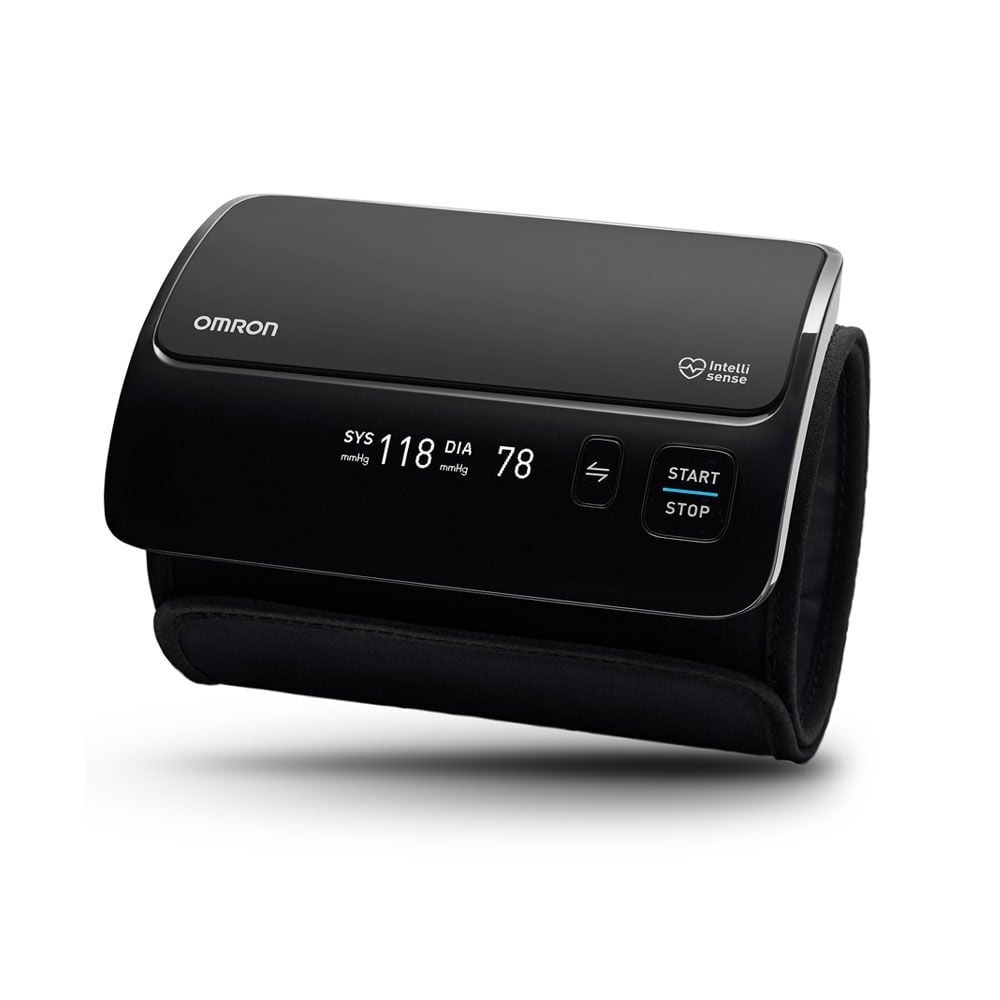
The best choice for most people is the Omron EVOLV (9.2/10). GearLab counts it among the most accurate monitors it has tried, and its molded cuff was the easiest to put on.

Check price on Amazon

Also worth a look: Omron X7 Smart AFib (Best for AFib Screening); Omron M3 Comfort AFib (Best Value); Braun ExactFit 5 Connect (Best for Two Cuffs).

Top picks at a glance

1

Omron EVOLV

Best Overall
9.2/10

Our take

GearLab counts it among the most accurate monitors it has tried, and its molded cuff was the easiest to put on.

Pros

  • Single-piece design with no tube or separate unit
  • Clinically validated, including for pregnancy
  • Wide cuff range suits most adult arms

Cons

  • Premium positioning compared with simpler Omron models

Full review

The EVOLV is the monitor we would point most people towards. Instead of a cuff attached by a tube to a separate box, everything sits in one compact, wireless unit that wraps around the upper arm. That removes the tangle of cables, makes it easy to keep in a drawer or take on a trip, and means there is less to go wrong. GearLab ranks it among the most accurate models in its comparison and found its molded cuff the easiest of the group to fit, which matters because an awkwardly placed cuff is a leading source of bad readings. Omron's own specification lists a 22 to 42 cm cuff, a memory of 100 readings, detection of irregular heartbeat and body movement, and AFib detection, plus clinical validation that includes pregnancy. Readings travel by Bluetooth to the OMRON Connect app, where you can follow trends and share them with a doctor. That combination of validation, a wide cuff range and a clean one-piece build is what earns the top spot: it works for people who just want a trustworthy number and for those who want a log on the phone. The trade-offs are modest. GearLab lists its price level among the drawbacks, and the unit sits in the more expensive part of the market. It also uses a single memory without separate user profiles, so a household with two people will rely on the app to keep readings apart. Anyone with an arm circumference beyond 42 cm should look at a large-cuff model instead. If you are choosing a first monitor, or replacing an unreliable one, this is the safest all-round decision on the list.

2

Omron X7 Smart AFib

Best for AFib Screening
9.1/10

Our take

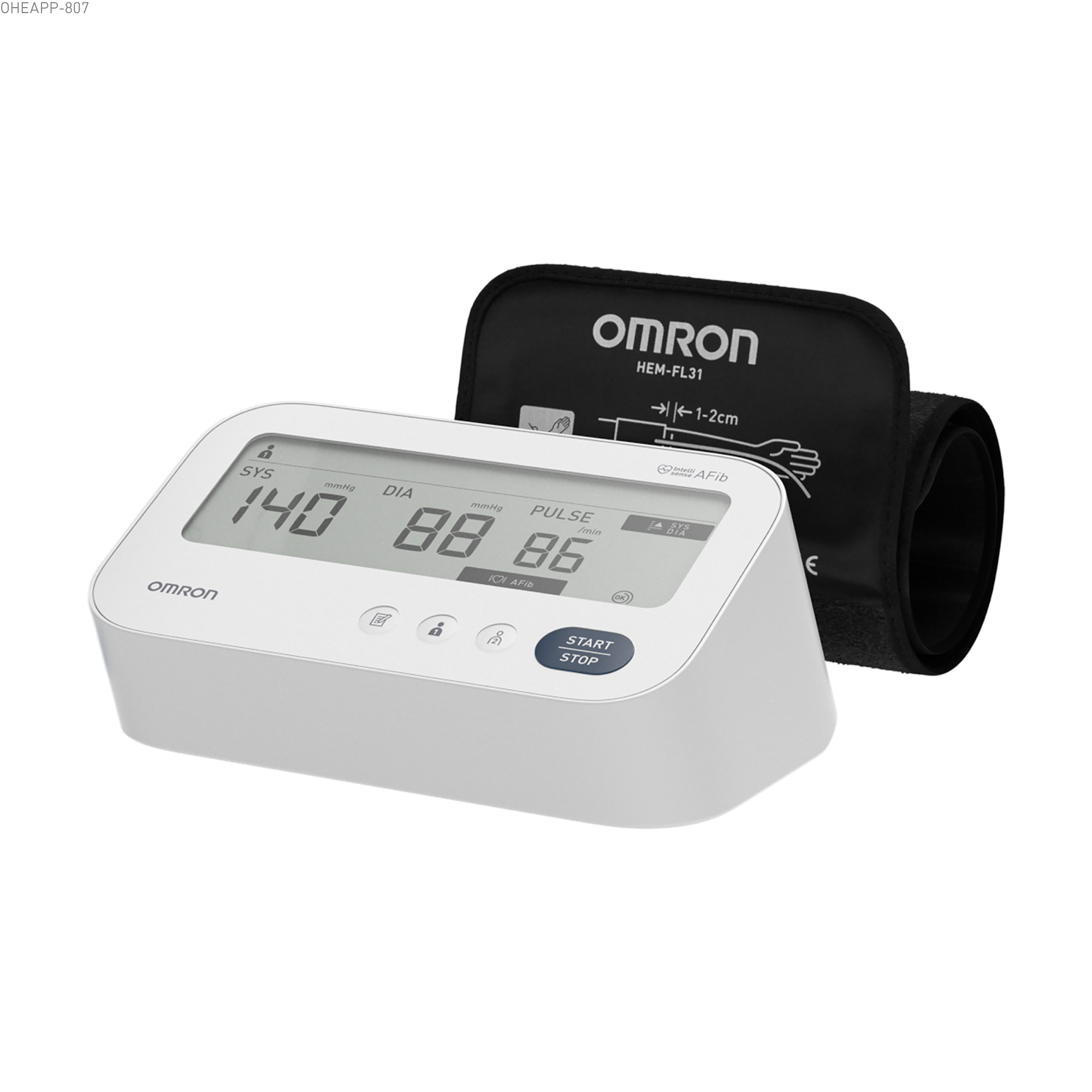
Omron's connected flagship adds automatic AFib screening and memory for two users to a clinically validated cuff.

Pros

  • Screens for possible atrial fibrillation on every reading
  • Separate memories for two users plus a guest
  • Large display with a high blood pressure indicator

Cons

  • Needs four AA batteries or a separate adapter
  • Bulkier than the one-piece EVOLV

Full review

The X7 Smart AFib is the choice for anyone who wants more than a blood pressure number. According to Omron, it screens for possible atrial fibrillation during every measurement, which can help flag an irregular rhythm that would otherwise go unnoticed. That is a screening aid rather than a diagnosis, and a flagged reading should always be followed up with a doctor, but for people over 65 or with a family history of heart rhythm problems it adds real value to a routine check. The rest of the specification is just as thorough. The Intelli Wrap cuff fits arms of 22 to 42 cm and is designed to measure accurately at any position around the arm, which makes it forgiving for people who struggle to place a cuff. Memory is split into two users with 100 readings each plus a guest mode, so a couple can share one device without mixing results. Bluetooth sends data to the OMRON Connect app, and the manufacturer lists clinical validation, including for diabetes and pregnancy. A large display and a high blood pressure indicator make the result easy to read at a glance. The compromises are practical. The monitor is a conventional design with a tube and a base unit, so it is bulkier than the EVOLV, and it runs on four AA batteries, which you may prefer to replace with the optional mains adapter if you measure daily. The extra screening features also mean a few more menus and symbols to learn. It earns second place because the EVOLV is slightly simpler and better documented in independent testing, but anyone worried about heart rhythm should put this one first.

3

Omron M3 Comfort AFib

Best Value
8.8/10

Our take

A no-app model that keeps the Intelli Wrap cuff and adds AFib screening, aimed at households that want accuracy without extras.

Pros

  • Intelli Wrap cuff with a wrap guide
  • Averages three readings automatically
  • Clinically validated, including for pregnancy and diabetes

Cons

  • No app or Bluetooth listed
  • Smaller memory than the X7 Smart AFib

Full review

The M3 Comfort AFib is Omron's answer for people who want a reliable, validated monitor without a smartphone in the loop. It keeps the features that matter most, a 22 to 42 cm Intelli Wrap cuff with a wrap guide, Intellisense inflation, body movement detection and a high blood pressure indicator, and adds automatic screening for possible atrial fibrillation. Omron states that it averages three measurements and that it has been validated in pregnancy, pre-eclampsia and type 2 diabetes, which makes it suitable for a wide range of households. The cuff is the main reason it works well for beginners. Instead of lining up a fixed ring around the arm, you slide it on and close it, and the guide shows whether it sits correctly. Memory covers two users with 60 readings each plus a guest mode, which is plenty for a family that writes results in a notebook or reviews them on the display before an appointment. It also takes four AA batteries, so it is easy to use anywhere with no charging. It is not for everyone. No app connection is listed, so you will not get automatic charts or exports, and the memory is smaller than on the X7 Smart AFib. If you want to share a trend with a doctor, you will need to copy numbers by hand or choose a connected model. Place it first on your shortlist if the budget is tight but you still want clinical validation and AFib screening, and you are happy to keep records on paper. It gives away very little in measurement quality to the models above it.

4

Braun ExactFit 5 Connect

Best for Two Cuffs
8.5/10

Our take

Which? includes it in its blood pressure monitor tests, and its two included cuffs help people who sit between standard sizes.

Pros

  • Two cuff sizes in the box
  • Colour-coded guidance on a large backlit screen
  • Syncs with the Braun Healthy Heart app

Cons

  • Needs four AA batteries
  • Less independent test coverage than the Omron models

Full review

The Braun ExactFit 5 Connect solves a problem that many monitors ignore: arms that sit awkwardly between standard cuff sizes. Where most competitors supply one adjustable cuff, Braun's listing shows two sleeves, a smaller one for 22 to 32 cm and a larger one for 32 to 42 cm. Which? names it among the monitors it tested, and the pair of cuffs is a sensible reason to pick it if you are close to the edge of a standard range, since using a cuff that is too big or too small is a leading cause of misleading readings. The device itself is straightforward. A large backlit display shows colour-coded guidance based on World Health Organization categories, so the result is easy to read even without glasses, and the monitor detects irregular heartbeat. A dual-user mode lets two people keep separate readings, and Bluetooth sync sends data to the Braun Healthy Heart app for tracking and sharing. It runs on four AA batteries, which are included. The weaker side is the evidence. Which? lists the monitor among the models tested, but its detailed scores are reserved for members, so we cannot point to a specific accuracy result, and it does not have the validation record that Omron advertises for pregnancy and diabetes. Treat it as a solid, well-designed option rather than the most thoroughly proven one, and confirm the validation information with the manufacturer if that matters to you. Choose it if a single cuff has never fitted you comfortably, if you value a clear colour-coded display, or if you want an alternative to Omron with app support. Otherwise, the Omron models above are the more established choice.

5

Withings BPM Connect

Best Smart Design
8.3/10

Our take

A compact, rechargeable monitor with automatic Wi-Fi sync, but GearLab found it slightly behind the average in accuracy and fiddly to learn.

Pros

  • Rechargeable battery with months of use per charge
  • Automatic Wi-Fi sync to the app
  • Compact and easy to carry

Cons

  • GearLab saw a wider spread of readings than the best models
  • Needs the app for full use

Full review

The Withings BPM Connect is the monitor for people who live in their phone and want data to arrive without effort. It is slim, rechargeable and portable, with a colour-coded LED display and a cuff that covers 22 to 42 cm. Results sync automatically over Wi-Fi to the Health Mate app, with Bluetooth as a back-up, and the history stays available there, which makes it easy to show a doctor a month of readings. Withings lists support for several user profiles, so a household can share one device and keep records apart. It is also the entry on this list where independent testing is least flattering. GearLab placed it slightly behind the average performers, with a few more readings outside its 10 mmHg margin and a wider spread of results, although it still judged it good enough to track trends. It also noted a learning curve, a display that is hard to read and the lack of an irregular heartbeat indicator. Which? includes it in its tests but keeps the scores for members, so we cannot add detail on that side. What that means in practice is that the BPM Connect suits people interested in trends and convenience more than in the last millimetre of accuracy. If you are managing a diagnosed condition, ask your doctor to compare it with a reference device, and consider one of the Omron models above, which have a stronger independent record. Its rechargeable battery, however, saves you from the AA batteries that the other models consume. Select it for the app experience and the design, and accept the extra care that comes with it.

6

Omron M2 Essential

Best for Basics
8.0/10

Our take

Omron's entry-level upper-arm monitor keeps clinical validation and one-touch use, and drops everything else.

Pros

  • One-touch operation and a clear display
  • Clinically validated according to Omron
  • Detects irregular heartbeat and body movement

Cons

  • Cuff covers only 22 to 32 cm
  • Single user and no app

Full review

The M2 Essential is for people who want to measure their blood pressure and nothing else. Omron describes it as a clinically validated upper-arm monitor with Intellisense inflation, irregular heartbeat detection, body movement detection and a high blood pressure indicator, all behind a single start button. The display is large and easy to read, and a cuff wrap guide helps you position the cuff correctly, which is where most home errors begin. It is the simplest monitor in this ranking and that is the point. Memory holds 30 readings for a single user, there is no app, and the included medium cuff covers arms of 22 to 32 cm. That makes it a good fit for an older relative who finds menus confusing, for a second device kept at a holiday home, or for someone who only checks their pressure occasionally and wants a number they can write down. The limits are obvious once you list them. Anyone with a larger arm will need a different cuff, since this one stops at 32 cm, and a household of two people cannot keep separate records. Without an app or Bluetooth you must note the numbers yourself, and the model has no AFib screening. Compared with the M3 Comfort AFib, you give up the wider cuff, the second user and the rhythm screening in exchange for a simpler device. If you want a straightforward validated monitor, one that is easy to explain to someone who dislikes technology, this is where to start. Measure your arm first to make sure the cuff range fits.

Frequently asked questions

Is an upper-arm monitor better than a wrist one?

Generally yes. Which? notes that wrist monitors are more prone to inaccurate readings than arm models because the wrist is not naturally at heart height, and its adviser recommends upper-arm devices as more reliable. A wrist model can work if you hold it exactly at heart level, but it leaves much less room for error.

How do I know which cuff size I need?

Measure the circumference of your upper arm halfway between shoulder and elbow and compare it with the range printed by the manufacturer. Many models cover 22 to 42 cm with one adjustable cuff, while others sell separate sizes. A cuff that is too small tends to overstate the result, and one that is too large understates it.

How should I take a reading at home?

Sit quietly for five minutes with your back supported, feet flat and arm resting at heart height. Put the cuff on bare skin, avoid talking, and take two readings a minute apart at similar times each day. Keep a log and share it with your doctor instead of reacting to a single number.

Does a clinically validated monitor really matter?

Yes. Validation means the device was compared with a reference method following an accepted protocol, and it is the main reason to trust its numbers. Which? tests against the AAMI/ISO standard and British and Irish Hypertension Society criteria, and notes that only the most accurate models pass both. Check the manufacturer's validation claims before buying.

What's new in this edition

This edition drops the Oxiline models, because we could not find independent reviews or validation records for them that we could cite, and the older Omron and A&D entries, whose current versions are no longer the ones sold in Spain. In come the Omron EVOLV, X7 Smart AFib, M3 Comfort AFib and M2 Essential, the Braun ExactFit 5 Connect and the Withings BPM Connect. The focus remains upper-arm monitors for home use, now centred on models available in Spain.

Buying guide

Checking blood pressure at home has become routine for millions of people in Spain, whether they have been told to monitor hypertension, are recovering from a health scare, or simply want to know their numbers before the next appointment. This ranking covers upper-arm monitors for home use, the format that independent testers and consumer organisations keep recommending over wrist devices. Which? points out that wrist monitors are more prone to inaccurate readings because the wrist is rarely at heart height, and the same advice appears in most professional guidance. Wrist models are therefore left out, and so are fingertip gadgets and smartwatches. We compared the picks of AARP, GearLab and Which?, together with the manufacturers' own specification sheets, and kept only models that are sold and supported in Spain. Accuracy and clinical validation come first: a monitor that disagrees with a clinic reading by more than a few mmHg is worse than none. GearLab's comparison against a control device is the clearest public example of how large the gap between models can be. After accuracy we weigh cuff fit, ease of use, memory and app support, and the extras that matter to particular households, such as automatic screening for atrial fibrillation or a second cuff size. The list leans on Omron, which is not a coincidence: it is the brand most reviewers consistently place at the top, and its range covers everything from a no-frills model to a connected one with AFib screening. Braun and Withings add a different take, with two cuff sizes in one box and a rechargeable smart design respectively. Each guide below says who the monitor suits and what it gives up, so you can match the device to your arm size, your routine and your need for data. A few habits matter as much as the model. Rest for five minutes, sit with your back supported and your arm at heart height, keep the cuff on bare skin, and take readings at the same times each day. Bring the device to a consultation once so a professional can compare it with their own equipment. Whatever you choose, check that the cuff range matches your upper-arm circumference, because a wrong cuff size is one of the most common reasons for misleading numbers.

Ranking methodology

Our score is an out-of-10 assessment that weighs what the reviews and manufacturer data we consulted conclude about accuracy and clinical validation, build quality, ease of use and value for money. In this category accuracy and validation carry the most weight, followed by cuff fit and ease of use. Build quality is judged by the display, cuff and construction described in reviews, and value by what each monitor offers against others in its class. It is an editorial judgement, not a laboratory measurement or an average of source scores.

Sources consulted Based on AARP, GearLab, Which?, and 4 more

The reviews and data this ranking draws on. We do not run our own lab tests: we compare the findings of these publications.

Tags

More rankings you may like